28 September 2026
Two thirds of parents want more time to read with their children - and working adults are ready to help them
New research from Chapter One shows that businesses have a practical opportunity to help close the literacy gap: most working adults say they'd volunteer to read with a child if their employer supported them
Nearly two thirds (64%) of UK parents spend less than an hour reading with their child in a typical week, according to new research by Chapter One. This puts most families below the recommended 70 minutes of reading time needed for a child’s development.
As a lead delivery partner for the National Year of Reading 2026 - a nationwide campaign to get more children and adults reading for pleasure - Chapter One commissioned the research to better understand the way the nation reads. The research comes against a backdrop of falling reading enjoyment among children aged between 5 and 8.
Despite the best intentions, family reading time is under increasing pressure. Almost nine in 10 parents (86%) say they would like more time to spend reading with their child, highlighting a gap between the support children need and the time many families are able to give. The main barriers are not parents’ lack of willingness to read with their children, but rather the time and capacity available to families.
When those opportunities become harder to find, children can feel the impact both inside and outside the classroom.
Confidence barriers are becoming harder to ignore
More than half of teachers surveyed (53%) say children's fear of making mistakes in front of others is a barrier to reading development, and 44% point to limited opportunities to practise one-to-one with an adult. Findings show that children don't just need help learning to read - they need the confidence that comes from undivided attention and the freedom to practise without fear of getting it wrong.
Case study: Mason, Year 1 pupil, Cumbria
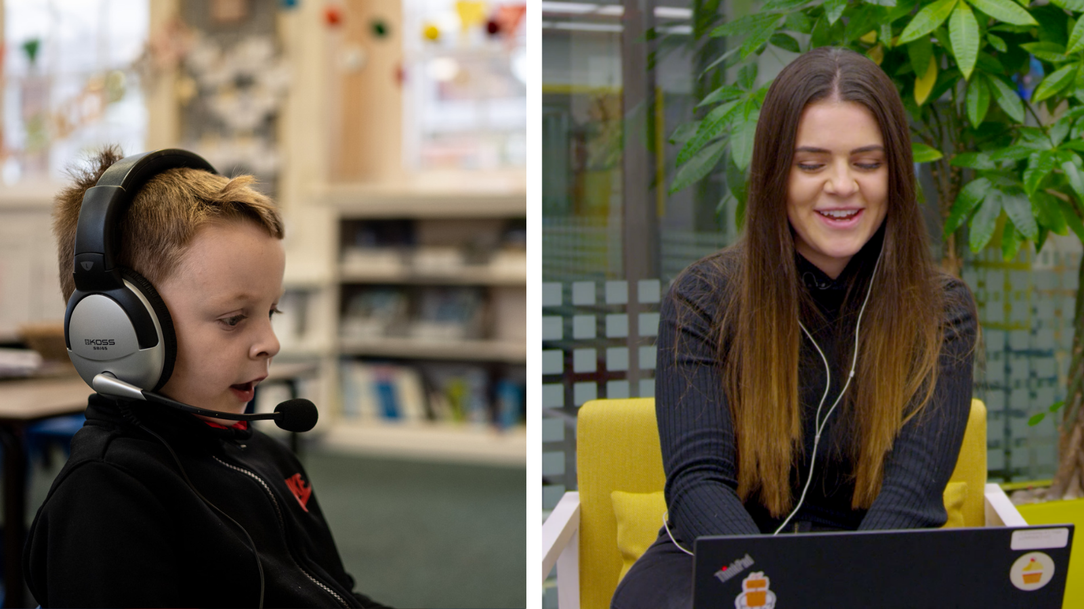
When Mason first began Chapter One's Online Reading Volunteers Programme, he lacked confidence in what he could achieve as a reader - if he came across something he didn't understand he'd put pressure on himself, which stopped him enjoying reading. His teacher put him forward for the programme, where he was matched with reading volunteer Stuart Michie, a senior manager at Atos, a global technology company.
"Chapter One provides us with a hugely successful intervention across our school," says Leanne Savage, a teacher at Distington Community School. "The one-to-one reading support their volunteers provide is like gold dust."
For Mason, the sessions with Stuart became a regular space to read without the pressure of making mistakes. Reading felt less like a test. From playing word games to talking about his interests, the sessions gave Mason the chance to learn about the world around him while building his confidence as a reader.
"Mason loves animals, and we often joke he'll be the next David Attenborough," says Amanda, his mum. "Through Chapter One, he's started to view reading as a way of learning more about the things he loves."
“It was absolutely brilliant to watch Mason’s progress as he went from strength to strength with his reading,” says Stuart. “For a child who initially lacked confidence in his own ability, it was wonderful to see him grow more comfortable and really blossom as a reader.”
“That’s what makes the Chapter One programme so special. You don’t need to move mountains to make a real difference. All it took was 30 minutes of my week to give a child a love of learning that could last a lifetime. I’m grateful that Atos gives us the opportunity to support Chapter One and play a part in helping the next generation discover where reading can take them.”
Children benefit from having more than one trusted adult to read with
The research shows overwhelming enthusiasm for children having direct reading support from trusted adults who can make a real difference to their lives.
Around nine in ten parents (87%) and teachers (91%) agree that having a trusted adult or reading volunteer read regularly with their child would improve their confidence. Almost all teachers (96%) say it's valuable for children to have a consistent adult outside their immediate family and school circle taking an interest in their progress, and 89% of parents believe it would strengthen their child's long-term love of reading.
As children grow up in a rapidly changing world, parents believe that the role of reading extends beyond literacy. When asked what difference reading volunteers could make, an overwhelming 90% said improving their child’s performance at school, and 91% said both improving educational opportunities and increasing their child’s enjoyment of reading.
A clear opportunity for businesses to step up
Alongside parents and teachers, 82% of working adults surveyed agree that every child should have access to regular one-to-one reading support if they need it, and almost four in five working adults (79%) agree that a trusted adult outside the family or school circle can have a lasting impact on a child's future.
Encouragingly, the research finds that just over two thirds (67%) of working adults would consider volunteering as reading support for children if backed by their employer, highlighting a positive and practicable opportunity for business to help address the literacy crisis. Almost half (45%) say seeing the impact they could have on a child would motivate them to volunteer, while over a third (36%) would be encouraged by flexible scheduling around their job.
As we consider the challenges and opportunities that lie ahead for future generations from education to employment prospects, both teachers (85%) and parents (84%) believe that reading volunteers can importantly help broaden their child’s perspective of the working world.
Just 30 minutes can change everything
Chapter One works to close the reading gap for children facing disadvantage, helping those who might otherwise slip through the cracks to develop the will and the skill to read. Our solution is simple and scalable. Through our Online Reading Volunteers Programme, children aged 5 to 8 read one-to-one with a volunteer from a UK business for 30 minutes each week, building their confidence and a love for reading from an early age.
Chapter One partners with nearly 200 organisations to bring employees into the programme as online reading volunteers.
Emma Bell, CEO of Chapter One, said:
"Parents want to spend more time reading one-to-one with their children, but the reality of busy family life can make regular reading time difficult to find. Businesses have a valuable role to play - by giving employees the flexibility to volunteer, they can help children access trusted adults and give their people the chance to make a meaningful difference beyond work. When a child begins to believe that they can read, that confidence can stay with them long after the book is closed."
Cath Burnet, Head of Audit and Opening Doors to Opportunities partner sponsor at KPMG UK, said:
“With almost two thirds of UK parents spending less than an hour reading with their child in a week, it's imperative to create opportunities for children to practise reading - particularly when teachers and families are juggling many competing priorities. These findings demonstrate a clear pathway for organisations, like us, to provide additional support.
“We’re proud to be part of Chapter One’s programme, supporting our colleagues by giving them the chance to volunteer to help build a child’s fundamental reading skills and grow their confidence.
“At KPMG we’re committed to Opening Doors to Opportunity for young people from an early age. By working alongside organisations, like Chapter One, we are supporting the next generation to give them the best possible start in life.”
Mark Fletcher, Partner and Chair of the Eversheds Sutherland (International) Charitable Trust, said:
"Our volunteers consistently tell us that the time they give to Chapter One is some of the most rewarding they spend outside their day-to-day work. It doesn't take much - just half an hour a week - but the difference it makes to a child's confidence and enjoyment of reading is real. We'd encourage other businesses to think about what their people could offer."
About the research
Teachers
Research conducted by Censuswide among 500 primary school teachers in the UK. Fieldwork was conducted 11–18 August 2026.
Parents
Research conducted by Censuswide among 1,000 UK parents of children aged 5–11. Fieldwork was conducted 11–18 August 2026.
Adults
Research conducted by Censuswide among 2,000 nationally representative UK respondents. Fieldwork was conducted 12–14 August 2026.
Adults in employment
Research conducted by Censuswide among 1,314 UK adults in full-time or part-time employment, from a nationally representative sample of 2,000 respondents. Fieldwork was conducted 12–14 August 2026.
NB: The research was supported by five of Chapter One's corporate partners: KPMG, Amentum, Ashurst Perkins Coie, Eversheds Sutherland and the Sodexo Stop Hunger Foundation
Get involved
Find out where Chapter One works here, and read the Chapter One guide to workplace volunteering here.
If you or your organisation would like to volunteer with Chapter One, get in touch with Karen Price at karen.price@chapterone.org.
For questions about the research, please contact Rebecca Hewitt at rebecca.hewitt@chapterone.org.
It all starts with literacy.

More news
-
News

Minister sees Chapter One's scalable literacy solution in his Cumbria constituency
Josh MacAlister OBE MP visits Distington Community School to see Chapter One in actionFind out more
-
News

Why volunteering matters for children's reading
Chapter One joins three national literacy charities to call for more reading volunteers during the National Year of ReadingFind out more
-
News

Chapter One's challenge to business as National Year of Reading launches
We're committing to recruit an additional 1,000 volunteers and calling on organisations to 'Go All In' for children's literacy in 2026Find out more
-
News

Chapter One welcomes two new author ambassadors
Children's authors Janeen Hayat and Gareth P. Jones support the launch of our One Million Stories by 2030 campaignFind out more
-
News

Partner, Volunteer and School Recognition Awards 2026
Celebrating our corporate partners, volunteers and school partnersFind out more
-
News

Chapter One wins Enabling Technology Award at the Social Value Awards
At Chapter One, we have found a way to use technology to enable human connection and deliver social value in areas of deprivationFind out more
-
News

Chapter One launches One Million Stories by 2030 campaign
Chapter One commits to reaching one million stories shared between our volunteers and children by the end of the decadeFind out more
-
News

Businesses step up to help Warrington children in National Year of Reading
We have launched our Online Reading Volunteers Programme in Warrington!Find out more
-
News

Chapter One receives £56,250 grant from Cisco Foundation to enhance reading platform
Investment in our platform will help us scale support for children facing disadvantage across the UKFind out more