"I'm good": How Ryan became a confident reader
What happens when a child receives sustained, one-to-one reading support from a volunteer over three years? This longitudinal case study follows Ryan through three consecutive years of Chapter One's programme, documenting his transformation through interviews with teachers and Sodexo volunteer readers
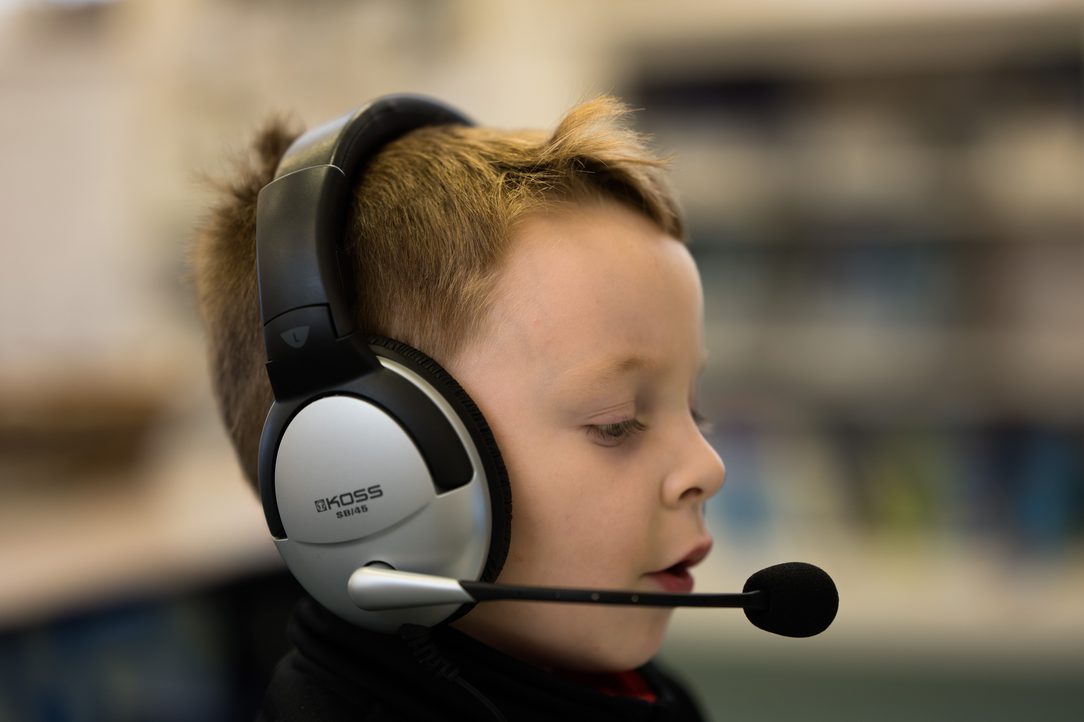
During a session with his Chapter One volunteer, Ryan made a simple observation that encapsulates his reading story: “I’ve been reading for three years [with Chapter One] - that’s why I’m good.” When a child can articulate his own progress like that, you know something meaningful has happened. For Ryan, a Year 3 pupil at Hill Top Primary Academy in Doncaster, those words mark a transformation that began with a boy who refused to attempt reading any word over three letters.
Ryan was selected to take part in Chapter One by Vicky Wilcox, his Year 1 teacher in (2023-24). She understood he needed a safe space to practise his phonics and build confidence one-to-one - something a busy classroom struggles to offer. His online reading volunteer Emma Smith from Sodexo often found their early sessions difficult. Ryan was distracted, resistant, and clear about his limits: “No, I’m not gonna do anything over three letters. That’s too hard.” By the end of that year, the foundations had formed. He was meeting the expected reading level - and, crucially, beginning to believe he could.
Year 2 (2024-25) brought a new teacher, Laura Pawlett, and a new Sodexo volunteer, Sasha Smith, along with the familiar dip in confidence after the summer break. But the foundations held. By the close of the year, Ryan was reading more fluently and, for the first time, finishing his classroom work and asking, “Can I get a book?”
Now, more than half way through Year 3 (2025-26), with volunteer Jennifer Cleary alongside him, Ryan’s reading has reached a new level entirely. Ms Pawlett (who remained his teacher in Year 3) describes him as reading “quite fluently” now, rarely needing to segment and blend as he was still doing early on in the autumn term. Jennifer was able to move quickly to the Chapter One platform’s highest reading level in their reading sessions. The focus had shifted from decoding to quality: pace, expression, self-correction.
Ms Pawlett was clear about her Year 3 target for Ryan: to reach the expected reading level. She believed this would happen through continued Chapter One support alongside the reading and discussion opportunities the classroom provided.
Now he does the voices - if there’s a shout, he raises his voice, gets excited. And it’s lovely
Jennifer Cleary, Ryan's Year 3 volunteer from Sodexo
At the start of the year, it was very much segmenting every word, blending it together again. Now he rarely has to do that - it’s just quite fluent.
Ms Pawlett, Ryan's Year 3 teacher
The most telling change over the years has been Ryan’s relationship with reading itself. From a child who had to be coaxed into any engagement with books, he now volunteers to read aloud in front of the whole class - “quite a big thing,” as Ms Pawlett describes it - and takes chapter books home for pleasure, having moved entirely away from school phonics readers.
Jennifer describes their Year 3 sessions as something closer to a genuine conversation about stories: Ryan relating books to his own life, speculating about what characters might do next, asserting his preferences about what they read together. He told his teacher that Chapter One “makes reading fun” - and that he looks forward to every session.
Confidence, the defining challenge of Year 1, has become a settled part of who Ryan is as a reader. Where he once told his teacher “I can’t do this, this is too tricky,” he now performs expressively in front of his class and self-corrects mid-sentence without becoming flustered - the mark of a reader who trusts his own instincts.
The impact has rippled well beyond reading. Ms Pawlett notes a “massive improvement” in his writing, naming him as one of the children in the class who has progressed the most, and links this directly to the vocabulary and comprehension gains his reading has unlocked. He contributes more confidently across the curriculum - in geography, humanities, drama and English. “Now he can put his hand up and share his ideas a bit better,” she says.
Even at home, the shift is visible. Ryan’s mother has begun speaking positively about his reading at parents’ evenings - “Mum has seen a massive change” - an echo of the journey from those first resistant sessions with Emma to the boy who, three years on, understands his own progress and takes quiet pride in it.
Ryan contributes more confidently across the curriculum - in geography, humanities, drama and English.
The transition across three volunteers - from Emma to Sasha to Jennifer - is itself a testament to the programme’s model. Each relationship had to be built anew, and confidence dipped after every long break. But each time, Ryan adapted more quickly. The resilience built in Year 1 carried him through Year 2; the fluency of Year 2 gave him the foundation for expression and ownership in Year 3. The continuity was not in any single volunteer - it was in the programme, and in Ryan.
“I’ve been reading for three years - that’s why I’m good.” In those words, Ryan captured how his relationship with reading has been fundamentally transformed. Not just a better reader - a reader.
Ms Pawlett sums it up simply: “He’s got that eagerness [to read] a lot more now.”
It is a transformation that promises to keep opening doors.
*Ryan is not the child’s real name
Literacy and poverty rates in Doncaster
Nationally, 4.5 million children (31%) were in relative poverty in 2023-24. In Doncaster, South Yorkshire, the rate was 33.6%. Hill Top Primary sits in the constituency of Rawmarsh and Conisbrough, where 33.2% of children are in poverty. At Hill Top, 32.7% of pupils were eligible for free school meals in 2023–24, against a national average of 25.9%, and the school’s area ranks within the 20% most deprived in England (IMD 2025). Research from the National Literacy Trust shows that two thirds of all wards in Doncaster’s constituencies are vulnerable to low levels of literacy. In 2025, 38% of 11-year-olds in Doncaster left primary school not reading to the expected standard.
How can companies get involved in Chapter One?
Chapter One’s virtual, time-efficient, flexible model for volunteering will enhance your company’s employee value proposition, whilst fulfilling CSR or social value commitments around education, social mobility and inclusion. Employees can:
- volunteer online directly from their desks with no travel
- make a direct impact on the lives of children from disadvantaged communities
- support local communities across the UK
- improve their own well-being by helping others
- reconnect with your company’s social purpose
If you’re interested in joining us, we’d love to hear from you! You’ll find out who we currently work with on our partners’ page. You can contact us here or email karen.price@chapterone.org.
It all starts with literacy.
More impact stories
-
Impact Story

The value of targeted support: Chapter One and Stop Hunger Foundation case studies
How Sodexo Stop Hunger Foundation is supporting Chapter One children across the UKFind out more
-
Research & Evidence

Our Impact Report 2024-25
Read about what our community of schools, volunteers, corporate partners and funders helped us achieve in our 2024-25 Impact ReportFind out more
-
Impact Story
Growing in confidence: Charlie's reading journey
For Charlie, in Year 1, Chapter One has helped transform reading from being a real challenge to an activity he enjoys sharing with othersFind out more
-
Impact Story
A reader begins to shine: Rohan's story
"He beams with confidence now"Find out more
-
Impact Story

Stories that spark: Harper's journey
Chapter One has given Harper, a year 2 pupil in Middlesbrough, “that real love for reading”Find out more